Tuesday, June 26, 2018

Dave’s Anatomy: My History as a Writer, #121: Writing As Revenge: “The Science Teacher

Illustration from "The Cask of Amontillado"


The nice thing about being a writer is that you can use your stories to take revenge of people who have wronged you in the past. You can write them up as characters. One meme on the internet read, “Don’t get on my bad side or I’ll write you as a character in my next novel.” True. People have done this, the most egregious example being Philip Pullman, who grew up in a religious home, became an atheist, and then gleefully kills God in the His Dark Materials trilogy. I did not set my sights that high, but I did go after a science teacher who did me a bad turn in seventh grade science class. He got turned into a character.
This particular teacher could not teach—like the coach in the Tank McNamara comic strips who cannot teach and does nothing but show films in the class, this particular teacher could not teach and also depended on films; that, reading in class, and his going on and on about taking notes, which you had to turn in once a week. “Taking notes” to him meant copying out of the book. In the story I say, the science teacher is one of those people they used to hire as teachers who were not qualified but got a job in a school because the baby boomer generation was crowding classrooms and anyone with a college degree who knew the basics of a subject could get hired to fill the gaps. This was also the case with my teacher.

I ended up disliking him because he yelled at me in class once for talking to a girl. I always loathed him after that. Thus the story evolved.
Lynda

Gary Parker wants to get revenge on his science teacher for yelling at him in class. The yelling, however, has more serious consequences than it did in my case. Three guys who don’t like Parker because he has long hair and plays in a rock band pick a fight with him over the incident. The parents of his girlfriend, Lynda, who have just been looking for an excuse to order her to break off the dating relationship, pounce. They split, Lynda meets another guy, ends up pregnant, goes to California to have the child, finds herself in an abusive marriage, and eventually commits suicide. Parker will go on to succeed as a popular singer. But he never forgets Lynda and he wants revenge. He remembers things he read in school:  Poe’s “The Cask of Amontillado,” about revenge; and the lines in Shakespeare’s Hamlet, “Vengeance should know no bounds.” He learns that one of his former musicians, who had to leave the band due to a drug problem, is working for the teacher, helping to pour asphalt on driveways. He formulates a plot.

He gets his old friend, Frankie, stoned. The teacher returns from lunch drunk, as he usually does, and starts shouting at the stoned Frankie to dump the load of asphalt. Impaired by opiated hashish, Frankie pulls the lever too hard and dumps the whole load on the teacher.

Parker’s idea was that the teacher should be splashed with hot asphalt, maybe get some burn scars, and have those as a remembrance. Things turn out worse. He is not killed by the load of hot tar but is partially buried in the onrush of it and loses both of his legs. The danger of the situation catapults Frankie out of his drug-induced lethargy and he rescues the teacher. Frankie performs so capably no one imagines he was stoned; and witnesses who saw it happen testify that the teacher was drunk, yelled “Dump it!” and excoriated Frankie with racial slurs (Frankie is black). No punishment falls on him. Like Montresor in the Poe story, Parker is revenged “with impunity.” Frankie feels badly about what happened. Davis helps him kick drugs, get back in the music world, and he ends up succeeding as a session guitarist and recording artist, marries, and settles down to live comfortably. The science teacher goes back to work teaching. Parker says, at the end of the story, I’m satisfied with that. I like to imagine Lynda is as well. 

The story appeared in Indiana Horror Review, 2013. Order a copy here.

For more titles, see my Writer's Page.

Ever get even with someone? Tell me about it in a comment.

Happy reading.


Friday, June 8, 2018

Dave’s Anatomy: My History as a Writer #120: Mother Earth as a Loving Mother: “The Gaia Proposition.”


Gaia


The Gaia hypothesis, a theory formulated by the chemist James Lovelock and microbiologist Lynn Margulis in the 1970s, theorized that earth was a huge, interlocking matrix of ecosystems, all in balance, all dependent, to some extent, on each other. They scientists named the idea after Gaia, a primordial goddess of the Earth in ancient Greek mythology. Since that time, the idea has been widely accepted, not only by the scientific community, but in popular culture as well. My story, “The Gaia Proposition,” draws upon imagery from this idea but also challenges not so much the hypothesis itself, but the apocalyptic scenarios many people draw from the hypothesis. Gaia is the mythic figure from the which the folk character of Mother Earth derived. What sort of Mother is Mother Earth; or, if Gaia were real, what kind of a mother would she be?

Winona Baker is an ecological activist. She earned a degree in Ecological Engineer, but jobs in the field are hard to come by and she works as a waitress at a bar to sustain herself. She is involved in local conservation efforts; and, every week, she leads a gathering of people who venerate Gaia. Winona insists it is not a worship service but simply a recognition of how important it is to care for the earth and to be aware of ecological issues. Sometimes, though, it looks worship:  The people assembled before a portrait of Gaia. Flowers surrounded it, incense burned in silver urns on either side of the image. The participants sang hymns—mostly popular songs like “Hidden treasure” by the sixties group Traffic and Enya’s “Caribbean Blue.” They also sang songs by composers who praised Gaia and Mother Earth. They did not pray but did, at the beginning, middle, and end of the gathering, observe silence. She herself admits the gathering may look resemble worship, but maintains it is not, she is not a “priestess” of any sort, and the gathering is purely secular and not religious.

A local evangelist, Marshall Stanwell, maintains what she does is worship. The two of them have debated the matter on local news media. Stanwell maintains that the nature of worship to “attribute worth” to something or someone. Since Winona pays tribute to the beauty, intricacy, and power of nature, this constitutes worship in his thinking. She chafes at the idea the what she does is “neo-pagan worship” and that she is a priestess.

Gaia Gathering

Of late, Winona has been active in opposing development near to a protected wilderness area outside of the city called Monteef Hills. She is frustrated and seems to be losing the debate, mainly because the development will not be within the protected area, but around it. She gives a passionate speech that seems to be well-received. Stanwell ridicules on a local radio talk show. It seems a lost cause and that the area around Monteef Hills will be developed. The development will adversely affect the location’s ecosystem.

 Winona gives an impassioned speech, but feels her cause is doomed. In bed that night, she does something she had said she did not, and would not do. She prays to Gaia:  “Lady Gaia, hear my prayer. I pray the Monteef Wood and the area around be kept safe.” She had thought to stop here, this being the thing she sought as a blessing from Gaia, but she went on. “I pray you will show the people of this community, and of the world, your power and your nature. May they know you are a goddess to be reckoned with. May they see you are a goddess who must be obeyed.”

woolly rhinoceros

The next day, her cell phone is overloaded with messages, as is her email file. She finds out why. Researchers have discovered, in Monteef hills, what appears to be a long-extinct woolly rhinoceros. The identification is confirmed—furthermore, scientists discover not just one rhino, but a herd of them. Soon, other reports come in. Passenger pigeons have appeared in Ohio; European lions are spotted in several countries; moa, a twelve-foot high, long-extent bird, are appearing in large numbers in New Zeeland; Caspian tigers, dodo birds, Tasmanian devils, and a herd of aurochs are observed.

Gaia, Mother of the Earth

The press rushes to Winona and asks for a statement. She replies that Gaia is not a wrathful deity but a loving mother. The dystopian visions of many ecologists, she says, do not reflect the nature of Gaia, Mother Earth. She is a kind, loving, nurturing mother. She has chosen an unusual and beautiful way to make humans aware of what has been lost through poor ecological practices. Now the people of earth have a second opportunity to restore things. Needless to say, Monteef Hills will not be developed.

Mystic Nebula is listed as a “defunct” publication by Duotrope, an online site that monitors publications, so I can’t give a link to the story. This is another tale that perhaps needs to be resubmitted.

For links to my books, see my Writer's Page.

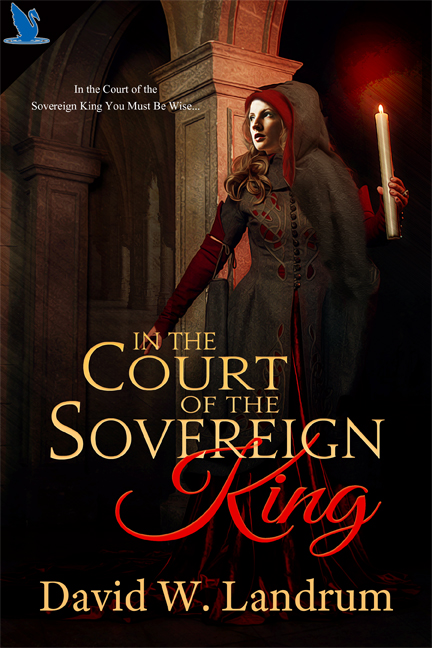
My latest novella, The Court of the Sovereign King is available for purchase.

Thank you for reading about and thinking about one of my stories. More to come.


Thursday, May 31, 2018

Back at the Blog Again: One of my Newer Stories and a Return to the Old


Yogini deep in practice

A blog is something you want to keep going at an established pace and keep up forever. But, as with all things, life tends to intervene. I've neglected my blog for a long time, and now it's time to start it up again, rekindle the fire, and begin my practice once more. "Practice" in the vocabulary of yoga means training, doing postures, maintaining your regimen of exercise, perfecting your mastery of the discipline. I have not done yoga very much the last few years, and my joints show it. They're stiff and inflexible as a result of neglect. In the same way, I haven't published my blog for a few months, and that seems to have affected my expressiveness.  I usually write about stories I have published, and my blog is subtitled, "My History as a Writer." This one, the kick-starter, will be a discussion of what I have published recently, and after this one, I will go back to a weekly post on what I've published in the past. 

The reasons I've neglected my blog:  mainly, my job teaching as an adjunct professor at a local university. I like teaching. I've done it all my working life and was once a full professor. A series of circumstances led me to resign from my professorship and begin teaching part-time. It was by choice and not by choice--a story I don't care to share. At any rate, preparation for two sections of African-American literature, a class I had not taught before, and one I was asked to fill in for, took up a lot of my time. I regularly teach a class called Literature of American Minorities, which always features a section of African-American Literature, and so, when the regular teacher of the class (who is African-American) could not teach it, I was the likely candidate to fill in.


And it was a wonderful class. Like most readers, I had encountered the African-American literature that gets anthologized a lot:  "Those Winter Sundays" by Robert Hayden, "We Real Cool" by Gwendolyn Brooks, "The Gilded Six-Bits" by Zora Neale Hurston. But the Norton Anthologies of Early and Modern African-American Literature presented works I had never read and authors I had not encountered. I read the poetry of Melvin Tolson (whom I had never heard of) and Ethridge Knight (whom I had heard of but never read). Both were magnificent poets, but they were new to me. I had read Gwendolyn Brooks, but never her novella, Maud Martha. A lot of new literature kept me busy. For another class I taught, I picked out some new books:  H Is for Hawk by Helen MacDonald and All the Light We Cannot See by Anthony Doerr—excellent books but reading them was time-consuming. 

So the blog suffered. Now it’s summer and I can get back to blogging. I’m going to talk about a recent publication and then next week I’ll get back to my anatomy as a writer. 

My latest publication is a story called “Azalea,” and it appears in the April issue of Amarillo Bay. That journal is special to me because my first-ever story, “The Girl Who Knew Nick Drake,” appeared there, when I first began writing fiction back in 2006.
Erina

It is the story of a Japanese-American graphic designer who is attracted to the CEO of his company. The social gap between them, however, is insurmountable—until one of his friends, the CEO’s cousin, asks if he would like to meet her. Jeremy and Erina meet. He mentions his love for Japanese poetry and quotes a line by the great haiku master Basho:  Cold, white azalea / lone nun / under a thatched roof. Erina reacts to this, they talk, Jeremy invites her to an exhibit of his art, and is astonished she accepts. 

Their romance develops. He learns, too, that Erina’s mother wanted her to be a Buddhist nun. She would not consider it, they quarreled, she went to college in the US to get away from her mother, and her mother died, the two of them unreconciled. He is surprised to find out that Erina—despite her beauty, wealth, and the glamor of her role—hardly dates and is still a virgin.  

As their relationship develops, he asks if she will pose for him. He wants to use her as a model for a painting representing the poem by Basho. The painting enables her to put the disagreement with her mother behind her. Art can bring healing through revelation of the soul. 

Here is a link to the story "Azalea." And since I mentioned the first story I ever published, “The Girl Who Knew Nick Drake,” here is a link to that. They’re both good, stories, long ones, and reading them will enhance your lives. 

More to come. Next week I’ll talk about an old story, “The Gaia Proposition.”


Wednesday, April 18, 2018

Dave's Anatomy: My History as a Writer #119: Ambition, Redefinition: "The Treasure at the End of the Rainbow"


The “wee folk” fascinate us. Elves, leprechauns, nixies, pixies, fairies, sprites—the tiny creatures who were especially prominent in the folklore of the Celtic nations:  Ireland, Scotland, Wales, and Britain before it went Anglo-Saxon. “The Treasure at the End of the Rainbow,” is a story about a leprechaun, though, as with most modern stories about such creatures, it is revisionist and plays with the tradition themes, descriptions, and plots found in such stories. 

The origin of it was a tale I read in fourth or fifth grade. The old legend is that if you capture a leprechaun, he (or she, though it seems like most leprechauns were male) had to tell you where he had hidden his treasure. But be careful:  they are consummate tricksters. In the story I remember, a young boy captures one of the wee folk and he takes him to a tree at the base of which the leprechaun’s gold is buried. The boy must fetcht a shovel. He ties a handkerchief around the tree so he will know it and makes the leprechaun swear he will not remove the handkerchief. Smilingly, the creature agrees. The young man goes, returns with the shovel, and finds, to his dismay, that every tree in the wood has a handkerchief tied around it. The leprechaun has triumphed through trickery. 

In my story, there is trickery on both sides.
Caffara

Caffara is a leprechaun hunter. She tracks the wee folk in the hope of capturing one and forcing him to give her his treasure. She is skillful, locates a handsome young man named Neven (I found some good Irish names), dances with him, invites him up to her room, and enjoys passionate embrace with him. He wakes up to find himself handcuffed to the bed. Caffara informs him what has happened and on his chest places a stone taken from the Lair of Morrigan. Morrigan was an evil Celtic goddess who waged war on the elves. Neven cannot breath, admits he is a leprechaun, and promises he will give her treasure if she frees him. She does so and reminds him that if he breaks his promise Morrigan will devour his soul. 

He gives her an address. She frees him. She goes to the address the next day and finds it an obstetrics clinic. She wonders if the treasure is hidden there or buried under it. A few days later, she finds she is pregnant. Neven has betrayed her. Morrigan will get his soul, and she finds satisfaction in this—but what will she do now? She gives birth to a boy and immigrates to Canada, where she finds a job and lives as a single mother. Her place in life does not allow her to date; remarriage seems too complex, so she raises her child. 


Her son, Colm, acts in a play his six-grade class puts on. Someone from a video production company offers to hire him for an advertisement campaign. He is photogenic. Soon he is in more ads and in TV commercials. He lands minor roles on television and then in films. By the time he is sixteen, he is a child star making a lot of money. Caffara finally has money and leisure. She returns to her native Ireland, where Colm is filming. She goes to where she somehow knows she will find someone she wants to see. 

Neven is where she thinks he will be. She apologizes for being a bounty hunter and a “predatory woman.” The following exchange takes place. 

“So your definition of treasure has changed?”
“Yes. Colm would like to meet you. I said I’d try to find you while I was over here.”
“I would very much like to meet him.”
“We’ll arrange it. Maybe”—and she got tears in her eyes—“we can even pick up where we left off—that is, if you’re interested in taking up with a predatory female.”
“I thought you were a beautiful woman. You are still.”
“A little deserved suffering helps out, I think. At least it did for me.” 

Grace comes. The wee folk are still tricksters. But they are also, under the layers of wiliness and scheming, good, benevolent, and forgiving. 

The story appeared in Modern Day Fairy Tales, which has closed. I have to laugh:  if I republished all the stories I printed in journals that are now defunct, I could have a second career! Maybe I will do just that. But if you want to read one of my stories about the elven folk, click on this link for Chantwood Magazine. Despite outwards appearances, elves are not the nicest or kindest beings who popular the universe.

Be sure to read my latest novella, The Court of the Sovereign King. 
Alethea is taken to the court of King and placed under a vow of chastity and service. Eventually, she comes to know the evil the that exists there. And it knows her.

For more titles, visit my Writer's Page.

Nurture your imagination.

Happy reading.


Wednesday, December 20, 2017

Dave's Anatomy #118: My History as a Writer: “The Girl Who Was Like Ruby Tuesday."


The song “Ruby Tuesday” by the Rolling Stones always intrigued me. The Rolling Stones were known for high-energy bluesy songs. “I Can’t Get No Satisfaction” and “Jumpin’ Jack Flash” were signature hits, but “Ruby Tuesday,” a song about an enigmatic girl with a unique philosophy of life, was slow and lyrical. You heard piano, bowed bass, and odd, haunting recorder that almost sounded like a human voice (played by Brian Jones). Those instruments, along with Charlie Watts’ drumming and Mick Jagger’s vocal, made the song as mysterious as the focus of the song, the woman with the odd name.

Many years later, when I was teaching about social commentary in popular music, one of the songs we examined in class was “Ruby Tuesday.” We talked about the personality of the main character of the song and her philosophy of life. This got me to thinking about what the projected character represented. What would such a woman, if one met her in real life, be like. 

Various stories exist about the composition of the song. Keith Richards claims to have written the music and lyrics (usually Jagger wrote the lyrics). Marianne Faithful, however, said that Brian Jones came up with the original tune and lyrics and Richards helped him complete the song. The inspiration for the number was said to be Linda Keith, a groupie girl Richards knew. I decide to take the idea into the realm of fiction.


The story takes place in 1969. Belinda Palmer and Clinton Pierce meet at a pot party which is busted by the police. They flee. Belinda helps Clinton get away. After the danger of arrest has passed, they talk. She says she lives in a small apartment and is a musician. Clinton is house-sitting for an uncle who owns a lake-side condo that has a piano. He asks Belinda to come to his place. She agrees. She ends up living with him there. 

She is enigmatic. This dialogue, early in the story, expresses as much:
“ … Do you work?”
“Sort of. I live with guys. They pay me.”
“You’re a hooker?” this came out of his mouth before he could stop it. He blushed. She did not look offended, though he hoped she would smile to assure him of as much.
“I guess I could be. I don’t like working regular jobs. Living with guys gives me time to do what I liked to do.”
“Which is?”
“Music. I love to play music.” 

Over the summer, their relationship develops. Belinda’s behavior, her reading habits, her philosophy on how to live, her tastes in music, the pronouncements she makes puzzle and delight Clinton. She challenges the things he has been taught about responsibility, goals, and vision.  

Clinton works at a country club as a golf caddie. When he invites Belinda eat with him at the restaurant, they encounter a man he knows just slightly, Raymond Miller, who begins to berate Belinda. Their argument escalates. He slaps her. He and Clinton get into a scuffle, though the staff at the country club and diners at the café break it up quickly. 


Miller is wealthy and a longstanding member of the country club. The owner tells Clinton he needs to take a few days off. Belinda, though, gets a lawyer and files a lawsuit against Miller, who caught Belinda and his daughter smoking a joint once and, like the father of the boy who commits suicide in Dead Poets Society, tries to assuage his guilt for his failure to relate to his daughter by blaming Belinda for the heavy drug use she engages in. Soon he learns he is out of job. Miller continues to use his influence to harass Clinton. Not wanting the bad publicly, he settles out of court with Belinda, paying her considerable amount of money. Clinton, though is out of a job. He works as a waiter in a local restaurant. Even there, Miller uses his clout in the city make Clinton’s life miserable. 

Clinton’s old girlfriend, Betsy, asks him how much he knows about Belinda. When he says he doesn’t know a great deal, she chimes in: “She’s a drop-out. Did you know that? I mean, she graduated from high school but she ran track in school and was in the dance troupe; music too and she was good—sang in the choir and played piano for us sometimes. Then she just quit all that and started doing weird stuff.” 


He remains loyal and begins to fall in love. But Belinda decides to use the money she received in the settlement to go on and follow her dreams. Clinton tries to dissuade her, but nothing works. Though she says she loves him, she goes her way. 

He later hears the song by the Rolling Stones and wonders if she too heard it and tried to live like the girl mentioned in the lyrics. He does not hear from her again. When the internet comes on the scene, he tries to find her with a net search, but to avail. Clinton marries Betsy, goes into business, accrues wealth, has a family. Yet he still thinks of Belinda—especially when he hears

                                                Good-bye. Ruby Tuesday.
                                                Who could hang a name on you,
                                                When you change with every new day?
                                                Still, I’m gonna miss you. 

“The Girl Who Was Like Ruby Tuesday” appeared in Wild Violet. You can read it here.


I am excited about the release of my newest novella, In the Court of the Sovereign King. Vaguely based on the mythic construction in the old King Crimson song, “The Court of the Crimson King,” it is a story of intrigue, struggle for power, and the eventual triumph of virtue and of ethical discipline over rapacious power.  Get a copy here.

For more titles, see my Writer's Page.

Merry Christmas, Happy Hanukkah, Happy New Year, and happy reading.

Tuesday, November 7, 2017

Dave's Anatomy: My History As a Writer #117: What It's Like To Be a Ghost: "Someone."


George Harrison, author of the song, "Someone"


Ghost stories are always fun to write, and the challenge of the story is to make it somehow different, quirky, dashing expectations, or opening a new understanding what ghosts are or what it feels like to be a ghost. In one of my stories, “The Ghost on Fulton Street,” a girl is murdered. When she finds herself standing beside her dead body, her first thought is, Shit! I’m a fucking ghost. What now? It would be a thing that takes adjustment.


In the story “Someone,” character Michael Paston, who has just gone through a divorce, finds himself drawn to ruined places and abandoned buildings. He goes through a site where workers are demolishing a brownstone. They are listening to the radio, and the song playing is the old George Harrison Beatle song, “Someone.” He listens, hearing the line, Carve your number on my wall / And maybe you will get a call from me—if I needed someone. On impulse, he writes his phone number on the wall. A couple of days later, he gets a call. A young woman named Portia Mallory asks if he would like to get together at an all-night coffee bar. He wonders if she might be a hooker, a mugger, or something along those lines, but agrees to meet with her. She turns out to be petite, attractive, and friendly. They drink coffee and talk. He finds out she works in a cookie factory in town and lives in one of the satellite cities around Grand Rapids (my home town, where most of my stories take place). She allows him to kiss her goodnight and they make plans to see each other again. Michael thinks the date went well.  


He asks a friend who works at the coffee factory if he knows Portia Mallory. He says he did, but she died a year ago by stepping on an electrical cord that had been uncovered during a repair of one of the machines. Michael looks up articles on the internet, reads news stories, looks at photographs, and finds that his friend is correct. The girl he met is dead. She is a ghost.

He is afraid but curious. And he remembers the sad look in Portia’s eyes and remembers how forlorn she seemed at times. He has watched Sixth Sense and knows that ghosts want something. He will find out what Portia wants and why she appeared to him. At a bar, he confronts her. She admits her spectral identity and explains to him that the building she haunts, the building where her apartment was, is, like the building where he wrote his phone number, to be demolished.

“I have to be anchored to a place. I have to have a place to center—somewhere that contains a residue of my past life. By residue, I mean energy, memories, recollections. When the place is torn down, I’ll be sent out into the air.”
“Meaning?”
“I’ll have no place to be. I’ll be a spirit whirling around in the wind and the elements—like in Dante’s Inferno where he meets the two lovers.” 


Michael thinks on the situation. The next time he and Portia meet he tells her he intends to stop the demolition of her old apartment building. She asks how, and he reminds her that he is a poet. She is skeptical, but he tells her never to underestimate the power of a poet.  

He begins a campaign to save the old building, which has a shop downstairs and, at one time, was declared a protected historical property. The City Council, however, waived the protection and permitted a company to tear the three buildings on the block down and build a parking garage there. Michael circulates a petition, organizes a rally, and holds a public poetry reading to protest the action by the City Council. The news media takes notice. People in the city rally to oppose the demolition.  

He also learns (this is my take on ghosts) that a ghost can take on a body from about 11:00 until around 3 a.m. He and Portia become lovers. But complications come. 

Portia manages to break out of the negative aura she has created around herself due to bitterness over her death and fear of being thrown out into the elements. Breaking out allows her to meet other ghosts. She finds out there are quite a few them around, and some of them are quite attractive. Michael suddenly has competition. He despairs, thinking he has lost her. She learns he is divorced, his wife is a lawyer and left him a spacious house and pays alimony to him; also, that they had a child and custody belongs to her, not to Michael.

 In the end, Portia decides to stay with him, though she tells him he may have some rivals for her love—rivals from the ghostly community. She and Michael go to his house and bed down for the night. The future for them is uncertain; but so is life, as they both have learned. 

“Someone” is one of the best stories I’ve written. It appeared in Electric Spec. Unfortunately, the journal has not archived all its past issues, so the story is not available online.

Soon, however, a new novel, Sinfonia:  A Painted Lady, will go into publication. Stay tuned for the release date. And, in preparation, read the first novel in the series, Sinfonia: The First Notes on the Lute. Below is the banner for the new novel. As I said, it will be out soon, no doubt in time for Christmas.

Happy reading!


Monday, October 9, 2017

Dave's Anatomy:  My History As a Writer #116. Love and Silence:  "The Space Between."


Ongoing characters find their way into literature now and then. Mark Twain created Tom Sawyer and Huckleberry Finn in The Adventures of Tom Sawyer. Both characters appeared in the sequel, The Adventures of Huckleberry Finn. Not many people know that he wrote two novels, Tom Sawyer Abroad and Tom Sawyer, Detective. Ian Fleming wrote fifteen novels about the now-icon figure of James Bond. W. Somerset Maugham wrote several short stories and a couple of novels featuring his ongoing character, William Ashenden. One of my ongoing characters, Sossity Chandler, has thirty-six published stories to her credit. An ongoing character about whom I wrote less, Martin Rollins, is the main character of the story for this blog, "The Space Between." 

Martin did not get as much space as Sossity. He appeared, though, in my first published story, "The Girl Who Knew Nick Drake," and in my first published novella, The Gallery; he is the main character in a few other stories, and in the "The Space Between."  Martin is a musician, a guitarist, not spectacularly famous, but with a solid fan base, a good reputation, and loyal fans. He easily makes a living as a musician.  In "The Space Between," he meets an old flame from high school, Talia Metzger, while he out on tour.


He and Talia had been intimate. The relationship was unusual to Martin because Talia was deaf. He and she are assigned a lab partners in a high school chemistry class. They become friends. He is amazed at the way she communicates. At first, she uses notes and an iPad to talk to him; and she can speak to some degree, even though she cannot hear what she is saying. Eventually, though, Martin learns to communicate with her through gestures, expressions, and through silences. She is beautiful and athletic. They are together two years. Things are going well. Then something splits them up. That is Martin's budding career as a musician. 

Talia cannot hear his music. He knows that those who have no hearing can comprehend music, but someone Tania's inability to hear drives a wedge between them and they split up. Martin makes a name for himself as a musician; he sees articles now and then on Talia, who has married, had children, manages a chain of charter schools, and is an advocate for the deaf. He is sitting in a coffee house, angry over a bad review of a performance when he gets a text message from her. She wants to see him.
Wealthy Street Bakery, in Grand Rapids, MI

She comes to the coffee house. Once, more the flame rekindles. He knows she wants him to make love to her. They arrange a meeting. After consummation, he surveys how things have changed and have not changed. What has not changed is his love for her; nor has her love for him. What has changed is that he has built a career; she has built a life. One more thing has changed:  she apparently now can understand and comprehend his music. 

He remembers a remark he once read (he thinks it was by Isaac Stern): In music is not the black notes on the page that mattes; it is the white space between them. This quote is usually understood to mean that in music timing is everything. But his love for Talia suggests to him that in music the silences are more importance than the sounds. Silence is a way of communicating. His relationship with her has taught him as much. She silently lets him know she wants to begin their relationship again. It will be an affair. She does not want to break up the life she has built. But he learns her husband could not reach one spot in her heart. It sat like an empty room, sending tiny impulses of discord into her soul. Only he could fill that empty space. Only the love he offered to her could complete and make her spirit whole. She told him this. She told him with her body. They part understanding they will see each other from time to time when Martin tours. Talia is organized and can arrange it. The story ends with Martin and Talia lying in bed together arms around each other, speaking with silence, their words more sure than any he had known before. The story, which I classify as one the ten or twelve best I have written, appeared in August 2013 in the journal Scholars and Rogues. Read it here.

To read more stories about Martin Rollins, read "The Girl Who Knew Nick Drake."

A novella featuring Martin is (a very good one, I'll add) is The Gallery.

New novellas coming soon. Stay tuned. 

I would love to hear your comments.