Saturday, January 18, 2020

Dave's Anatomy: My History As a Writer #130: Art and Love: The Mural of Tillotoma

Choice is a conflict that propels many stories. In the Odyssey (which I am reading in Emily Wilson's marvelous translation) Odysseus turns down the immortality the goddess Calypso offers him and chooses to remain mortal (and eventually die) so that he can return to his wife, family, and people; in Pilgrim's Progress, written a thousand years later, Pilgrim turns his back on Vanity Fair and all the temptations he encounters in order to arrive at the Celestial City; in my favorite novel, John Fowles' The French Lieutenant's Woman, Charles Smithson chooses the woman he loves over Victorian respectability. Choices always mean conflict, and conflict is the essence of storytelling.

In "The Mural of Tillotoma," the main character, Kairavi Nagaswami, has to choose between the opulent lifestyle her family would enlist her in and what she comes to value in love. 

Kairava's family is wealthy, lives in a mansion, and has everything they could want or need. She and her sisters fly to London to attend concerts and theatrical productions; to New York to shop; to Delhi and Tokyo to meet with friends and spend money. Of the three young women in her family, she is considered the least beautiful. On a trip to New York she meets an Indian girl who is studying to be an anthropologist and, in the summer, is going on an archaeological dig in Israel. When Kairavi asks her why she is going she simply says, "Because I want to." Kairavi's outlook on life begins to change. She tells her parents she does not want to marry right away. She would like to attend college.


Tel Aviv University
They are puzzled but, since she is the youngest and, in their opinion, the least marriable daughter, they grant her request, though they are surprised when she elects to attend not Cambridge or Harvard or the University of Delhi, which are prestige schools, but the university of Tel Aviv. The school, she tells them, has a top-rate archeological department and the location provides opportunities to go on digs that might yield significant artifacts.

She graduates, still not married (but with an Israeli boyfriend), embarks on a career, and finds, on her first dig in India, a perfectly preserved chamber with a completely intact set of murals depicting the story of Tillotoma.

Tillotoma was, in Indian legend, created by the craftsman of the gods to be the most beautiful women of all time. This turns out to be a problem because two very powerful gods, Shiva and Indra, both fall in love with her. To avert a war in heaven, Brahma, the chief god and creator, transforms her to a mortal woman of average looks and she marries a mortal man and is able to live a life without gods fighting over her.

The discovery propels Kairavi into an archeological celebrity. Her discovery is carried in National
Tillotomma
Geographic, Smithsonian
, and Indian Archeology. The BBC, Indian Public Television, and PBS produce reports on her and her find. She receives offers for jobs at prestigious universities. Kairavi sees her choice as auspicious. She will be able to marry the man she loves and pursue the career she decided on. She reflects, ironically, that, like Tillotoma, she has gone from privilege to being an average woman.


A good decision, she is able to tell herself.

The story appeared in a now-defunct journal, Intellectual Refuge. Someday I might try to remarket it.

Read my latest novella, Sinfonia: A Painted Lady. A vampire girl who is a lute player and has been alive for hundreds of years finds out that someone painted a portrait of her back in the 1600s. And its existence is threatening her, her coven, and vampires everywhere.

Happy reading.


Wednesday, June 5, 2019

Dave’s Anatomy: My History as a Writer, #129: Elves are Nasty Creatures: “Straight on Till Morning.”


My last two blogs talked about stories I have written that were odd, strange, weird, bizarre. The one I will talk about today is a little more tame—well, sort of. It was a fantasy story with a paranormal, supernatural element, but at least it followed the usual format and satisfied the standard expectations such a story raises. “Straight on Till Morning” is the story of a woman who is abducted by elves and about her husband, who journeys to elven territory in order to find her and bring her back. 

In Celtic lore, elves are not diminutive creatures with pointed ears who sit around on toadstools and are cute and lovable. They are just the opposite. They are rapacious, nasty, and dangerous—and, they possess magical powers to facilitate their being rapacious, nasty and dangerous. The idea for this story partially came from one of the best horror/supernatural stories I have read, Graham Joyce’s Some Kind of Fairy Tale, a novel that presents elves as they are traditionally understood by the ancient peoples of the British isles. They are dangerous. They abduct and enslave humans. To free someone they have abducted you have to be as tricky and ruthless and they are. 

Anisa

Chauncy’s girlfriend, Anisa, a rising star who performs Celtic music, disappears. Shortly after that, he hears a musician he himself has done music with, Sossity Chandler, state her belief in the supernatural. They talk and she suggests Anisa has been abducted by the “fairy folk”—elves. They search the area where she disappeared and find evidence for this. She suggests he sleep in the fairy ring they find (a fairy ring is a ring of grass that can serve as a portal to the world of elves). He does, bringing a guitar and supplies and, when he wakes up, finds himself that world. He immediately sees Anisa. 

She has sensed him (living in eleven land she has already accrued small magical powers) and chides him for coming and tells him the elf who abducted her and now claims to own her and will also sense Chauncey is there. Sure enough, the elven man who abducted he--Sutton--shows up. He and Chauncy argue. He says he will murder Chancey, who calls him a coward to harm an unarmed man. The elf challenges him to a dual. 

O'Carolan

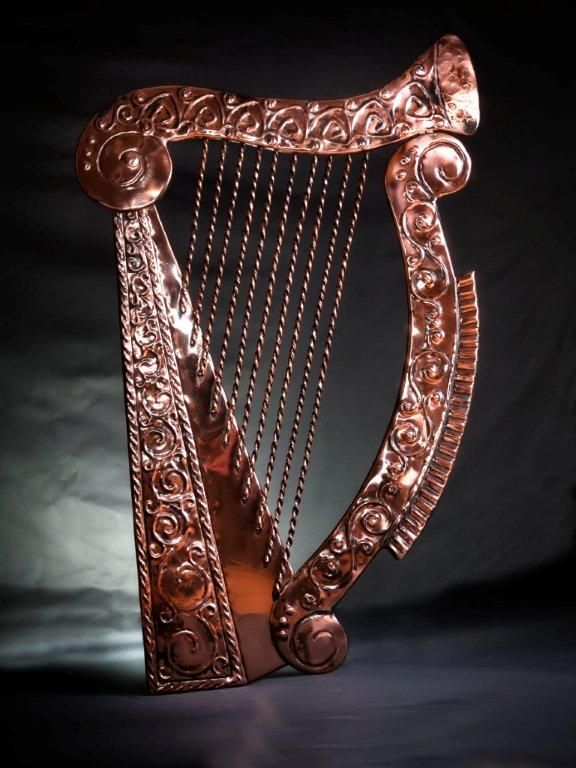
The other elves welcome Chauncey and arrange the duel. While he is there he learns more about the elven culture and meets someone he venerates, Turlough O'Carolan. O’Carolan was an Irish harper from the late fifteenth century whose music has survived and is widely performed today. (I am a musician and have performed many of the tunes he wrote.) Chauncey hears him play and learns he was abducted just before his death and brought to eleven land. He tells O’Carolan about his upcoming duel with Sutton and his plan to win it. The harper is amazed at his plan but tells him it just might succeed; and, he says, when he plays for the Council tomorrow morning, he will put in a good word for Chauncy.

The eleven Council meets to set up the terms of the dual. Chauncey is given choice of weapons. 

The following exchange takes place. As Chauncey is the challenged party, choice of weapon is his. 
            “What weapon do you chose?”
“Guitar,” he said.
The Leader of the Council and everyone else in the room, including Anisa, gaped. The Leader leaned forward.
“I’m not certain I understand you, young man.”
“Guitar is a musical instrument. I am challenging Sutton to a duel of music, not conventional weaponry.”
The Leader’s face showed a mixture of caution, puzzlement, and censure. “This is most unusual,” she said.
“Music is the weapon I chose.”
“This has no precedent, but I am intrigued,” a Council member who wore a funny-looked Renaissance hat said. Chauncey remembered Carolan’s promise to speak to the Council. Perhaps this man was one of Sutton’s enemies. “I can’t recall that such weaponry is forbidden.”
The Leader made to speak, but another Council member—another woman—beat her to the punch.
“Our laws say the weapon be ‘a thing in the use of which a noble is trained.’ All our nobility must learn music of some sort.”

The Council withdraws, debates the lawfulness of music as a weapon but decides Chauncey’s request is valid.

Chauncey is confident of victory, but Anisa tells him not to be too self-assured. The elven nobles, she says, are trained in music from childhood. And the people of the Council like the kind of music Sutton will most likely do.


When the duel begins, Sutton sings and his performance is well-received. Chauncey plays guitar, performing songs by O’Carolan. The judges are stunned by the beauty of his music and declares him winner of the duel.

Sutton is now at his mercy. At the Council’s behest, the demands all of his opponent’s land and money. He also calls upon an elven woman he has come to know in his short stay there that she promised to grant him a “boon.” She says she did and he can have anything he wants. He asks for her slave girl Kelly, who had helped him on different occasions. The woman willingly grants his request. He gives Kelly all of Sutton’s money and then gives her as a bride to Raymond, a human who was kidnapped by the elves and has decided to stay in their land. Sutton, he is told, will be punished for his illegal abduction of Anisa. They depart elven land and find themselves in a theater in New York City where Sossity Chandler is performing. She greets them and promises to arrange for their return to Ireland.

“Straight on Till Morning” appeared in Fiction on the Web. Read it here.

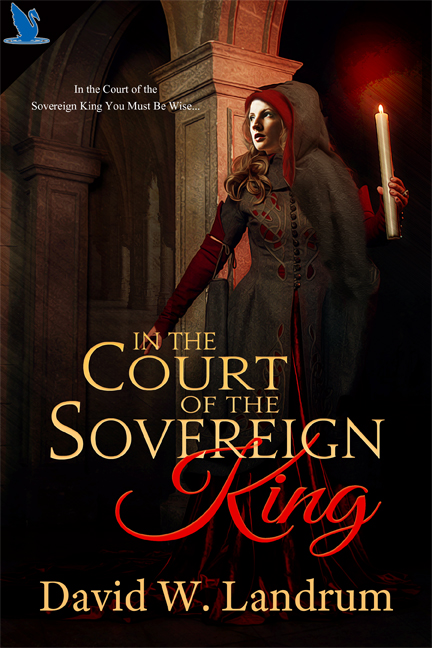
For more good fantasy and paranormal, check out my novella, The Court of the Sovereign King.

Happy Reading.

Thursday, May 23, 2019

Dave’s Anatomy: My History as a Writer #128: A Crazy Tale: "The Mechanical Horses from Shandong Province"


A Proper Victorian Lady

Most writers have story where they experiment, let go, let their imagination run wilder than they thought possible, and, sometimes, mix genres. A story I wrote back in 2013 titled “The Mechanical Horses of Shandong Province,” did just this. It’s the craziest story I ever penned. It was a steampunk/vampire/multicultural/alt-history/romance sort of story. It takes place in Edwardian era (the first decade of the Twentieth Century) in British India. It deals with a British colonial woman who is a vampire but also a scientist. She is trying to find a way to stop an invasion by Bhara Khan, a descendent of Genghis Khan who has conquered much of China and has his eyes on British India. And she is involved with a young man on the base. 

Unusual combination, but as a story it managed to work at least reasonably well, I think. Here is some of the basic plot. 
British Fortress in India
The reader learns early on that Catherine Travers is a vampire. The opening scene finds her cleaning up from dining on the blood of a victim she finds in the outback of India, transforming to a bat, and flying back to meet with her colleagues at the British garrison where she lives; the garrison also functions as a research laboratory. Catherine is working on development of the what she calls “cluster shells” (similar to our modern cluster bombs) that will, upon exploding, send out a swarm of smaller projectiles that will also explode. Bhara Khan’s cavalry is so skilled, and so numerous, that it can successfully charge into artillery or at machineguns. The British team is working frantically to develop a weapon that will stop him. Like many Victorians, Catherine was frightened of sex and had thought to live in celibacy until she crossed over to the vampire world. Besides unleashing a hunger for blood, it has unleashed her desire. She has found someone to supply it, a young man named Wesley, who is, the text notes, surprised at her violence and passion but satisfies her enough that they have stayed together. 

Sitting down with her colleagues, Catherine learns that they will receive a visit from Parnashri Navin, a local leader, and a priestess/courtesan who practices sacred sex. Though she does not tell the others there at the table, she knows Parnashri holds the key to defeating Bhara Khan. 

The two women met after Catherine became stranded after a train wreck. Frantic to find shelter from the sun, she hides a cave. She sees Parnashri dance in worship to Shiva and is mesmerized by her:  Catherine thought she was the most beautiful woman she had ever seen. Her arms and legs were long, her torso slender and muscled. She had large round breasts, smooth, strong shoulders and a black glossy swath of hair where her legs met. Her feet, long and narrow, moved with grace and elegance and her body followed their flow. When they speak, Parnashri says she knows Catherine is a rakshasa, a vampire. She welcomes Catherine and receives her into her home and her temple. 

Parnashri tells Catherine of the impending invasion. She also says the Chinese have delivered a weapon they believe will defeat Bhara Khan’s cavalry. 

These are mechanical horses. They are not the kind one rides. They are weapons all in themselves. The Chinese engineers give her a demonstration. They set a large number of full-sized clay soldiers in a huge room and unleash the horses:  The things transformed to golden storms of violent motion. They reared, charged, leaped, and turned in circles, legs lashing out, bodies whirling, heads swinging from side to side, their broad hooves striking with lightning-flash motion. Catherine hardly breathed as she watched the mechanical devices reduce the clay figures to piles of shard in mere seconds. Catherine becomes convinced these devices can defeat Khan. But how can she convince the others at the research center of this? 

When she learns that Parnashri will visit the center, she begins to formulate a plan. The women there are aghast that a woman who practices prostitution will be their guest. Parnashri makes a good impression and offers to demonstrate the mechanical horses. One of the Englishmen insults the Indian woman (so rudely even the other British are shocked). Catherine storms off, but Eliot, the man who insulted Parnashri, follows her. He accuses Catherine of collusion with the Indians and threatens to reveal her relationship with Wesley. 

Parnashri
He does not know, of course, that she is a vampire and that when vampires feel threatened they react. Catherine turns into a wolf and kills Eliot.   

She reverts to her human form, smears herself with Eliot’ blood, and makes up a story about a wolf getting into the compound and attacking her and Eliot. As she walks under the moonlight with Wesley, her lover, she is confident, with this turn of circumstances, that the British will allow a demonstration of the mechanical horses, which the Chinese emperor has offered to supply them with for free. 

The story appeared in a now-defunct journal with the marvelous name, Professor Dobbs’ Historical Primer of the Extraordinary. It only ran one issue. As C. S. Lewis said of a story he had published in a discontinued newspaper, “I hope the book did not hasten its demise.” The story, crazy and quirky, had a limited readership, and, re-reading it, I liked it so much I may try to find another home for it. Sometimes crazy and quirky is good.  

If you are looking for a marvelous read, get a copy of my novella The Court of the Sovereign King. 

Happy reading.


Wednesday, March 27, 2019

Dave's Anatomy: My History as a Writer, #127: A Not-So-Good Story of a Not-So-Good Situation: The Third Nun's Tale

Commedian Johnny Carson, who hosted the Tonight Show for over twenty years, once gave some advice on how to respond when a proud parent introduces you to their ugly baby. You say, “Wow, that sure is a baby, isn’t it?” I’ve got a story like that, the one I’m going to discuss in this post, and the only thing I can say of it is, “Wow, that sure is a story, isn’t it?” The tale to which I refer is called “The Third Nun’s Tale.” Maybe my estimation of it is a little too harsh, since it was published in Separate Worlds, a now-defunct Canadian journal that took a couple of my stories a while back. "The Third Nun's Tale" had to have had some merit, I guess, for a journal to print it. But reading it now, I have to admit it was not one of my best efforts; and it underscores the old lesson that not everything you write is going to be stellar.

Geoffrey Chaucer
“The Third Nun’s Tale” drew on my knowledge of the poet Geoffrey Chaucer. I have taught his Canterbury Tales many times. It is a series of stories of every sort told by a group of medieval people who are making a pilgrimage to the shrine of a saint. The tales are all about love—but love means different things to different people. A knight making the pilgrimage sees love in terms of chivalry. Some—a Miller, a Foreman, and other assorted rogues—tell dirty jokes, since love consists of getting laid. There are some nuns on the trip, and two of them tell stories suggesting that love consists of devotion to God, remaining a virgin, and living a life of chastity and self-denial. These are “The Prioress’s Tale,” and “The Second Nun’s Tale.” That gave me an idea. What if there was a nun who did not believe this, was not a virgin, and had been sexually exploited? What if her idea of love was different? Thus it was that I began to write “The Third Nun’s Tale.”


The Prioress
Griselda (also called Sister Lydia), is travelling with Madame Eglantine, her Prioress, and Rosemary, another nun. Eglantine is the name Chaucer gives the Prioress in his story; Rosemary is the name I gave the Second Nun. Griselda notes that on the way over Rosemary had argued with one of the other pilgrims (the Franklin), who said that if everyone lived in virginity the human race would cease to exist, since no one would have children. As Rosemary is waxing eloquent on the details of the debate she says she told the Franklin, “To lose virginity is to lose the key to Heaven.” This makes Griselda shudder. Even though she has take the three-fold vow of poverty, chastity, and obedience, she lost her virginity. And two men—both monks who discovered her secret—use her to fulfill their lusts and threaten to expose her lying about her purity if she accuses them.

As a girl, she began a sexual relationship with a young man named Joel. He and his family were secret Jews. Once after they had made love, she was discovered by a group of men who decided to do their will upon her. A monk is with them, and as he readies her for her ordeal, he notices semen running down her leg. He does not let the other men molest her, but makes her his own mistress.

Griselda/Sister Lydia
Later, a preacher comes to her church. His hellfire sermon frightens her into taking religious vows. She becomes a nun, lying about her disqualification. Marius, the monk, of course, knows this and regularly visits her, blackmailing her with the threat that he will expose her and have her burned at the stake. She reflects on this:  Griselda knew her whole life would be this way. Marius would exploit her and tell his friends about her. She would serve as their whore for the rest of her time in the convent—the rest of her life until he got tired of her and had her killed or until she got pregnant. If she got pregnant, they would let her bear the child and then burn her. Anger and frustration turned to sorrow.

Then she sees Joel, who tells her Marius plans to get rid of her by selling her to a brothel. He has arranged for two men to kidnap her. Joel instructs her not to resist them. He will rescue her. Sure to his word, she is kidnapped. Her abductors (who are very much like the Pardoner and the Summoner in Chaucer’s poem) take her to a tavern and tell her they plan to transport her to London and sell her there. Joel appears at that time and offers to buy her for more money than her kidnappers will receive selling her in London. He gives them gold and tells them where they will find more of it.


The story ends with Joel and Griselda living in Damascus, which welcomes Jews and Christians. They learn, later, that the two men who kidnapped her were both killed in retrieving the pile of gold Joel had informed them about. Joel and Griselda put down roots. Griselda sometimes longs for the snow and cold of England, wonders what happened to the Prioress and Rosemary—and wonders if their tales will ever be told.

The story referred to a lot of Chaucer:  “The Prioress’s Tale,” “The Second Nuns Tale,” “The Pardoner’s Tale” are all referenced in it. Several Chaucerian characters were named as well. It was a guy who taught medieval literature’s idea of a good time.

“The Third Nun’s Tale” was printed in Separate Worlds, which has closed, as many online journals have. Better, maybe, just to let that story rest.

Much better is my latest novella, The Court of the Sovereign King.  Purchase a copy of it here.

I would love to hear your comments. 

Friday, March 8, 2019

Dave’s Anatomy: My History as a Writer #125: Goddess Needed: “The Spirit of the Forest Cold"


Sword and Sorcery is the mainstay of fantasy writers. Tolkien set the standard with the Lord of the Rings trilogy and everyone follows suit, me no less than anyone else. I’ve written a few in the genre that reaches back into the middle ages and utilizes elements from that time, enhancing, adding to them, transforming them imaginatively.


“The Spirit of the Forest Cold” found its inspiration in a poem by the late Irish writer Seamus Heaney. The poem, called “Punishment,” focuses on the body of a young woman that was found in a peat bog in Germany. She had been hanged (or strangled); her body, weighted down with stones, had been thrown into the bog. Chemicals in such places often preserve the human body; several such bodies from the early Iron Age have been recovered in this way. The manner in which the young woman died suggests she had committed a crime that was considered heinous and, thus, was executed and denied a proper burial (Heaney suggests adultery). He relates her fate to the abuse and mistreatment of women in his own nation, who were stripped naked, had their heads shaved, and then were then handcuffed to bridges for the “crime” of associating with British soldiers.
Artist's reconstruction of bog girl's face.

The poem got me thinking of the unnamed woman whose body was found. What did she do? The corpse was of a very young woman, slender, probably from lack of food. Did she exchange sex for food? Why was she killed? I began a story that centers around a family. The reader sees them talking about the upcoming execution. The girl is being starved, kept in a cage, and the children of the town take great delight in tormenting her. One of the things they do is bring bread, tease her with it, and eat it in front of her. One boy in the village, Rolf, feels sorry from her, gives her his morning portion, and speaks kindly to her. After she is killed, he mourns for her. She appears to him in a dream and thanks him for his kindness.

Later, during a long, snowy winter, when food runs out, people claim to see the girl walking in woods. The elders of the village consider finding her body in the bog, removing it, and giving her a decent burial. One day Rolf meets the girl, Mathilda. She tells him, “The faerie folk revived my soul. They can do that for those who have died unjustly.” Furthermore, she tells him the elves have made her into a goddess Rolf has heard of:  The Spirit of the Forest Cold. And, eventually, she sends him on a quest.

She sends him to find Bertina, the woman who revealed Mathilda’s adultery so she was killed; and
Steroa
also to rescue Steora, a young warrior woman from Rolf’s village with whom he has fallen in love (and become intimate). Both are with the Franks, the enemies of the Saxons. Bertina has deserted to their side and accepted their religion. Steora was taken captive but has escaped, is on the loose, and the Franks are searching for her.
Rolf makes a journey into Frankish territory.

He finds both Bertina (who has become a Christian nun) and Steora and manages to return them to the village just before an attack by the Franks descends upon it. The battle goes in favor of the Saxons, the Franks are repulsed. Rolf is recognized as a hero.

But he has lost Steora to a leader of his people. They are already married. Matilda appears and confronts Bertina, who repents of what she has done. Matilda says there is no more reason for anger and gives Bertina permission to marry Derik, the man over whom they had fought. Rolf is heartbroken by the loss of Steora but is made to remember there is another woman who loves him. Mathilda takes him into her home with the design of marrying him. The gods, she tells him, can be a bit stingy with granting immortality, but they admire him for keeping to the old faith and extol his bravery in battle. She thinks the request will be approved.

A few days later, the villagers find the body of Matilda, the rope still around her neck, in a bog a short distance from the place where they threw her in. Rolf asks her (in her goddess form) about this and she tells him that part of her spirit had detached itself and was the ghost people saw roaming the woods. Now, she says, that part of her can at last rest. The villagers bury her body in the ancestral burial ground and make sacrifices to atone for their treatment of her.

“The Spirit of the Forest Cold” appeared in Silver Blade. Read it here.

My latest novella, The Court of the Sovereign King, is available. Get a copy here.

I would love to hear your comments.


Friday, November 9, 2018

Dave’s Anatomy: My History As a Writer #124: Religion, Politics, and War: “The Saint”


I’ve often heard that politics and religion do not mix. Well, that’s a fairly new idea. In ancient times, if one nation defeated another, the explanation was that the God of the victorious nation was stronger than the god of the defeated one. Early on, Christians used the sword to spread the faith (e.g., Franks forcibly converting the pagan Saxons); Islam spread its faith by war. Christians and Muslims, and factions within those two religions, often fought against each other. Leaders used religion to drum up nationalistic fervor.

 Many early science fiction writers thought that religion would not be a part of the future—overlooking the fact that religion is part and parcel of the human race and has been around since our history began. In Arthur C. Clark’s Childhood’s End, religion fades away when a new race of being introduces Earth to matters that advance our evolution. In the early Star Trek series, religion was irrelevant. Then a funny thing happened on the way to Degoba. After Star Wars, with its Zen-like Force and  Zen-monk-like Jedi Knights, religion suddenly made a roaring comeback. Even the later Star Trek spin-offs, Voyager and Deep Space Nine, gave place to religion:  the Borg worshipped a mandala-like geometric pattern and the Bajorans were a very religious people.

I have no doubt that all the faith, good, evil, sincerity, hypocrisy, and politics that religion has brought about on Earth will also exist in a galaxy where space travel is possible. So in my sci-fi universe, religion exists as much as it presently does. Other races have their own faiths and, sometimes, convert to religions brought from Earth. I cannot be convinced that just because a man or woman can ride about in a spaceship they will not feel a longing for the Divine.

My story, “The Saint,” takes place in a future world where the Terran Alliance (Earth and its colony planets) is a major player. There are pro- and anti-Terran systems. One of the races that the Terrans and many of the others in the galaxy constantly fight is the Housali. The Housali are treacherous, technologically advanced, and completely unscrupulous. They often engage in espionage and are eager to use religion as a manipulative tool for furthering their political ambitions. 

In “The Saint,” special forces operative Laurissa Culdoon is sent on assignment to capture the leader of an insurgency. The insurgent, Justina Zita, has convinced the people of the planet that God has spoken to her and she is his appointed messenger. Laurissa has orders to capture her. With the help of a supporting platoon, she is able to defeat the force Justina is leading, kill her bodyguards, and knock her unconscious. 

In my sci-fi universe, the Terran (Earth) Alliance is dominated not by Europeans but by Indians. Hinduism the most widespread religion and Hindu culture the primary cultural force—though there is significant minority or Europeans and other races who also belong to the Alliance. Justine Zita’s insurgents have attacked Hindu temples, massacred clergy and committed outrages on renunciate women in ashrams (Hindu nuns). The Alliance knew that only by taking Zita out would they be able to end the violence of the insurgency. When Laurissa has captured the woman, she contacts her commanding officer, Kamala, to tell her the mission is accomplished.

After the capture, Laurissa learns that Zita is being mistreated. She talks to Kamala, whose life she once saved in battle, and asks if she will grant her a favor. Kamala, who owes Laurissa “obligation” because she saved her life, agrees. Laurissa asks to see the woman.

She finds that Zita has been stripped naked and is guarded by male guards. Kamala has filed a petition for a writ of torture—permission by the government and military to use torture on the woman; and they plan to execute her. Laurissa uses her influence with her friend Kamala to get clothes for Zita. They talk and Laurissa’s suspicions are proven true. She has female doctors examine the prisoner. They find hallucinogens in her system. She convinces her superiors that the Housali have used the woman. Hoping to stir up an insurgency on the planet, they have convinced her that God is speaking to her and she must lead a military effort to remove the Hindu influence form her planet. The hallucinogens make her hear voices she assumes are from God. The Housali also want her executed. If she is made a martyr, they realize, this will spur her follows to continue fighting.


A medical examination and “drying out” from the drugs she had been given makes Zita return to her old religion and repudiate her role as a military/spiritual leader. The insurgency is fully broken by this. Zita will not be executed but returned to her home planet, where the government will mediate between Hindu and Christian claims and concerns. Home with her husband and children, Laurissa recalls how religious violence on her old world had hurt her as well.

“The Saint” appeared in the anthology VFW: Veterans of Future Wars. It is available in print. Get a copy here.

The Court of the Sovereign King is a story of intrigue and perseverance. A young woman is taken in the annual levy, placed under a vow of chastity, and sent to serve in the Court of the Sovereign King. She soon knows the evil that dwells there. And it knows her. Get a copy here.

For additional titles, see my Writer's Page.